YCS L7 Smart Curve Hot Air Rework Station: Curve Control for Phone Repair
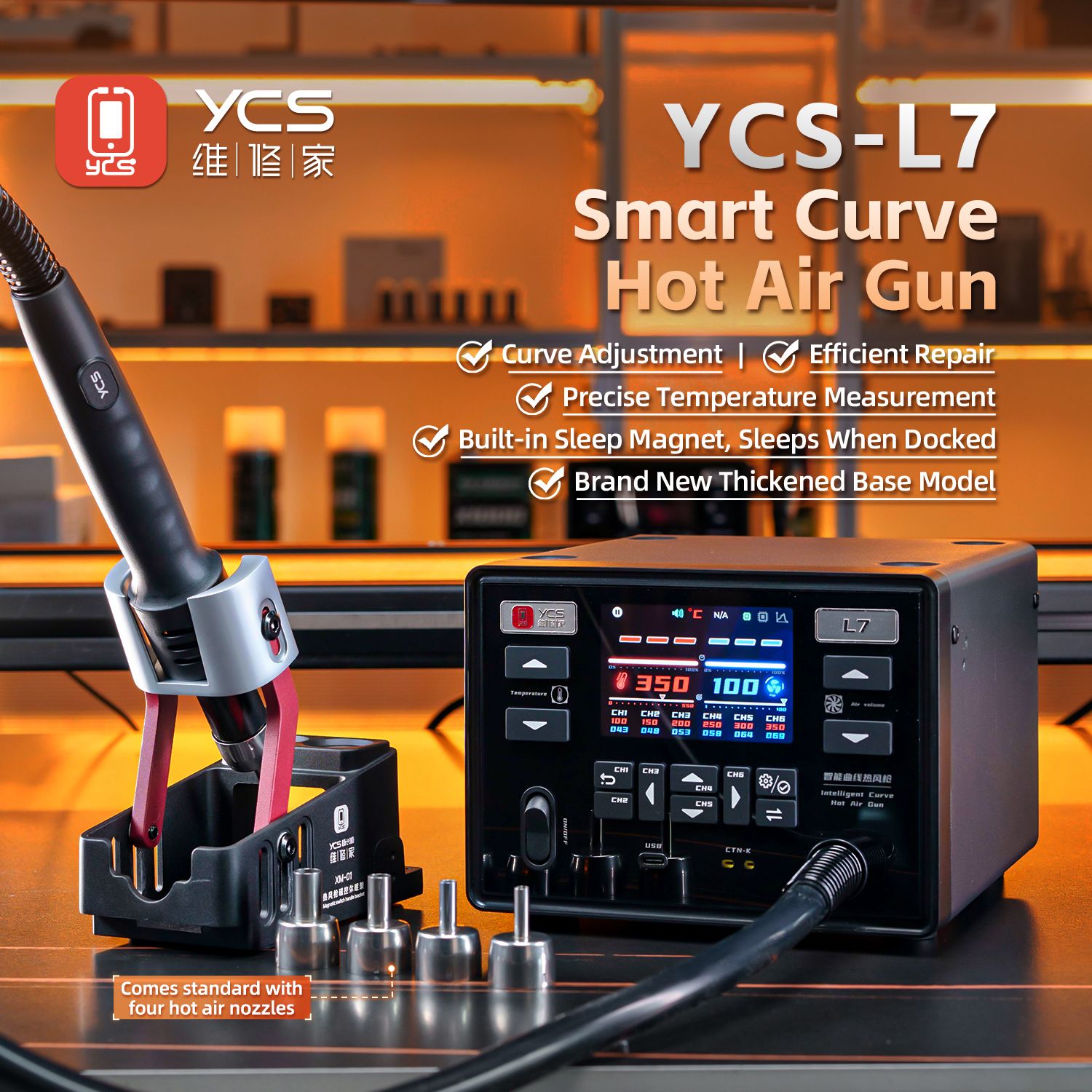
A hot air gun is the tool that decides whether chip removal is routine or risky, yet most benches still run blind: two dials, no display, and every technician guessing their own temperature. The YCS L7 Smart Curve — the hot air rework station from Mr. Yang's YCS tool line — replaces the guesswork with an HD color screen, editable heat curves and 18 one-click presets. This guide explains how curve control works, which nozzle fits which job, and which of the two L7 models belongs on your bench.
What curve control actually changes on a repair bench
A basic hot air gun gives you a temperature knob and an airflow knob. The L7 gives you a graph: you place temperature nodes and wind-speed nodes along a time axis, and the station follows that profile instead of a fixed setting. Why does that matter? Because real rework is not one temperature — it is a sequence. You preheat gently to drive off moisture, ramp up to soaking temperature for the solder to flow, then hold while you lift the shield or chip. With a curve, that sequence is repeatable: the same profile runs the same way at 9 a.m. and at 9 p.m., on your bench and on your colleague's.
The HD color screen makes the profile visible while it runs — temperature, airflow and the active preset level are shown together. When a technician can see the curve, deviations from it are obvious immediately, which is exactly what you want when a board is expensive and the window for a clean lift is short.
The 18 presets: Curve, Large Chip and Small Chip modes
The L7 organizes its 18 preset slots into three modes of six levels each, so a shop can standardize its most common jobs and trigger them with one press:
- Curve Mode — more precise. Linear control of temperature and wind speed for custom profiles; the six curve slots hold your proven preheat-soak-lift sequences.
- Large Chip Mode — more stable. Efficient, fast, stable and uniform airflow for bigger shields and large-package ICs that need wide, even heat.
- Small Chip Mode — faster. Rapid heating and strong airflow for small components where a long soak would risk damaging nearby parts.
- CH1-CH6 quick-set keys sit on the front panel next to a mode key, so switching between saved jobs does not interrupt the work in progress.
Base Model or Side-hanging Model?
The L7 ships in two versions that share the same 1400W heater, curve control, presets and nozzle set. The difference is where the handle parks — and what that does to the footprint:
| Feature | Base Model | Side-hanging Model |
|---|---|---|
| Handle parking | XM-01 magnetic sleep stand (vertical dock) | Side bracket on the unit |
| Unit size | 180 × 232 × 150 mm | 193 × 232 × 150 mm |
| Weight | 2.5 kg (3.3 kg packaged) | 2 kg (2.5 kg packaged) |
| In the box | Main unit, XM-01 stand, 4 nozzles, nano acrylic tape, power cord, hex key, manual | Main unit, 4 nozzles, power cord, manual |
| Best for | Benches that want the gun docked upright between picks | Crowded benches that prefer the slimmer profile |
YCS L7 Base Model vs Side-hanging Model
Both models carry the built-in sleep magnet: park the handle and the station cools down and sleeps, lift it and it heats back to your preset automatically. That habit matters more than it sounds — it cuts idle running, reduces heat wear on the heater and handle, and keeps an unattended station safe.
Choosing the right nozzle: 5, 6, 8 and 10 mm
Four nozzles come standard, and using the right one is the difference between a clean lift and a scorched board:
- 5mm — precision airflow for micro work: small passives, connectors, and tight spots next to shields.
- 6mm — the daily maintenance nozzle for general component-level work.
- 8mm — focused airflow for chips and shield removal where you need concentrated heat.
- 10mm — wide-area heating for adhesive softening, backplate and large-surface work.
Where the L7 fits on a complete bench
Hot air is one leg of the rework triangle. Shops typically pair the L7 with a soldering station such as the QianLi H240 or H400 for iron work, and step up to the F1X integrated desoldering platform when BGA-level rework with integrated hot air and soldering in one unit makes sense. On a Pushi repair desk, the L7's compact footprint leaves room for a microscope, a DC diagnosis meter and the XM-01 stand side by side — which is exactly the kind of layout the curve presets were built for: one profile, any technician, same result.
Q: What is the YCS L7 used for?
It is a 1400W hot air rework station for phone and electronics repair: shield removal, chip and connector rework, and adhesive softening. Its curve control lets you define how temperature and airflow change over time instead of running a fixed setting.
Q: How many presets does the L7 have?
18 one-click presets in three modes — Curve, Large Chip and Small Chip, six levels each — plus CH1-CH6 quick-set keys on the front panel for one-press switching.
Q: Do both L7 models include the nozzles?
Yes. Both the Base Model and the Side-hanging Model ship with four stainless nozzles: 5mm, 6mm, 8mm and 10mm. Only the Base Model additionally includes the XM-01 magnetic sleep stand.
Q: Is the YCS L7 available in 110V?
Yes — the L7 comes in AC 220V and AC 110V versions. Tell your distributor your country's mains voltage when ordering so the correct version ships.
Q: Is YCS a reliable brand for repair tools?
YCS is the tool brand built around Mr. Yang, one of the most-followed repair educators in the industry, and its lineup covers microscopes, soldering and hot air stations, power supplies and consumables. Vexagoo is an authorized distributor of QianLi and YCS repair tools, so every unit is factory-genuine with warranty support.
Ready to add curve control to your bench?
Vexagoo is an authorized distributor of QianLi and YCS repair tools. Browse the YCS L7 Smart Curve hot air rework station — Base Model and Side-hanging versions, 110V and 220V — or message us on WhatsApp for wholesale pricing and a nozzle set matched to your workflow.
Tools Mentioned in This Guide
YCS L7 Smart Curve Hot Air Gun
The YCS L7 Smart Curve is a 1400W hot air rework station for phone repair with an HD color screen, editable temperature and airflow curves, 18 one-click presets across Curve, Large Chip and Small Chip modes, and a built-in sleep magnet that parks the gun into auto sleep. Available in Base Model (with XM-01 magnetic sleep stand) and Side-hanging versions — a professional YCS heat gun from Mr. Yang's YCS repair tool line, shipped with four nozzles (5/6/8/10 mm).
View Details →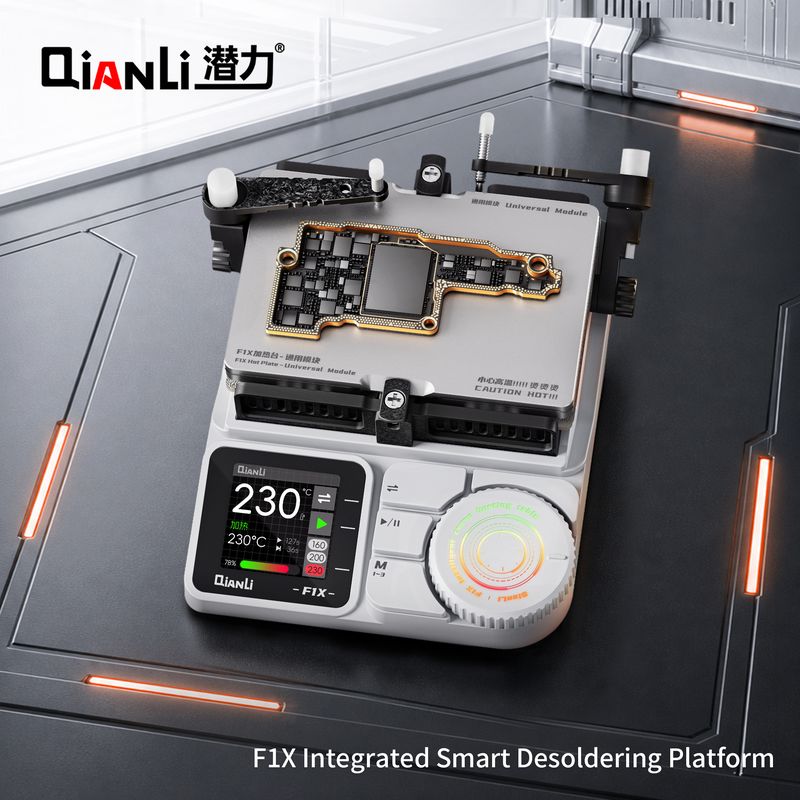
QianLi F1X Desoldering Platform
The QianLi F1X is an integrated smart desoldering platform combining hot air and soldering iron in one digitally controlled unit. Rapid heat-up, T12/T245 tips, and sleep mode make it the all-in-one rework station for BGA and motherboard repair.
View Details →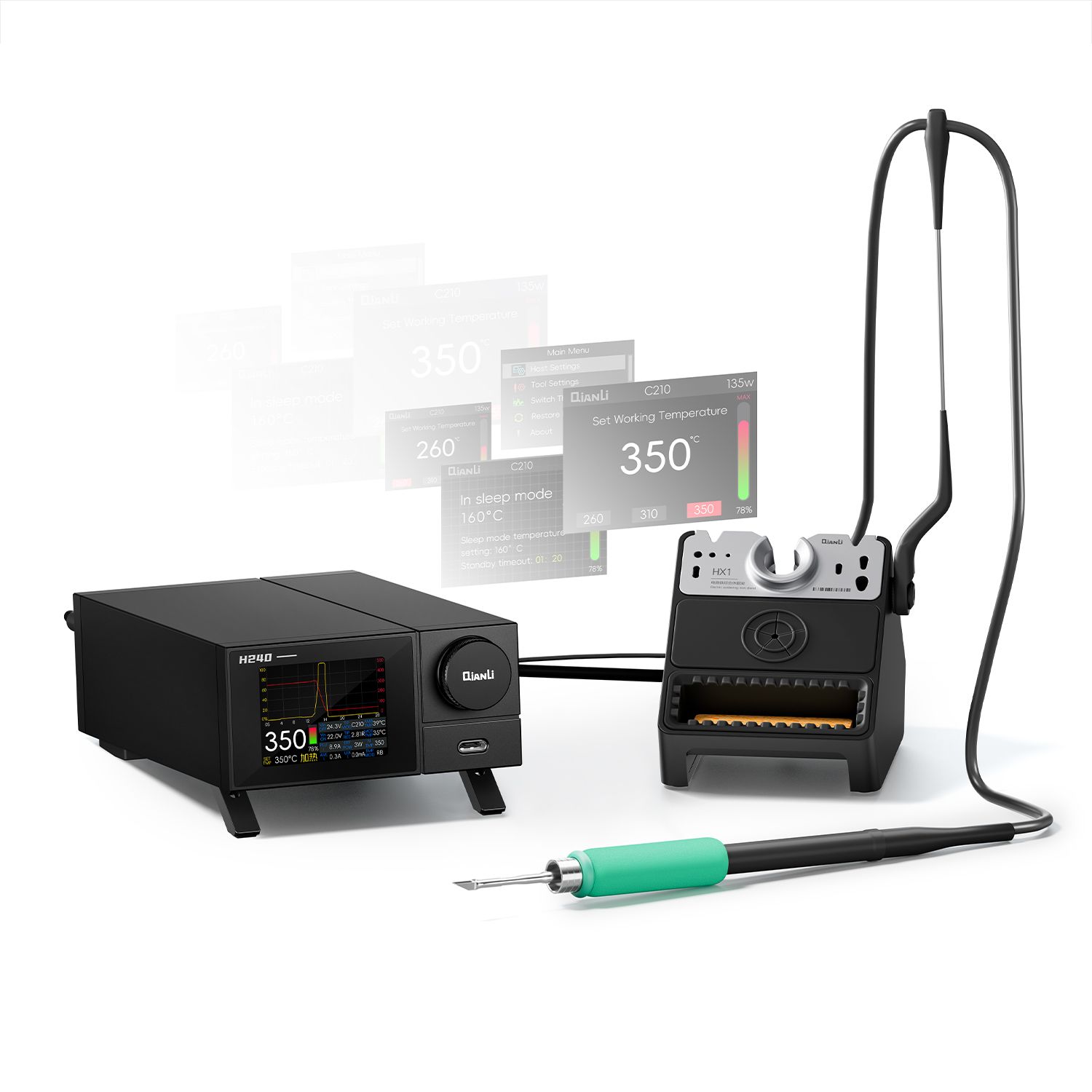
QianLi H240 Soldering Station
The QianLi H240 is a digital soldering station with rapid heat-up, precise temperature control, and sleep mode. Compatible with T12/T245 tips, it handles BGA rework, IC soldering, and connector repair - the standard entry point for phone repair shops.
View Details →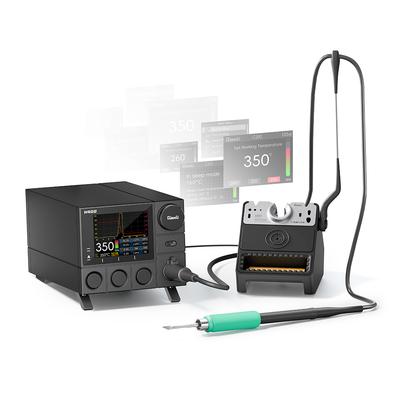
QianLi H400 Soldering Station
The QianLi H400 is an upgraded digital soldering station with finer temperature control and faster response than the H240. T12/T245 tip compatible, it is built for daily micro-soldering, BGA rework, and motherboard IC work in professional repair shops.
View Details →